


Food Hunt: Pixel Puzzle
4.5677.00 Reviews
App Specs
- Version
- 0.41
- Updated On
- License
- Free
- Downloads
- 1,000,000+
- Developer
- EVERFUN
- Categories
- Puzzle
- Platform
- Android
Screenshots
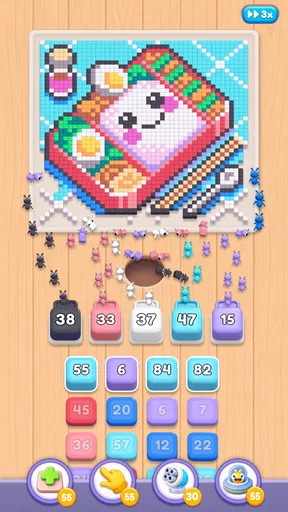
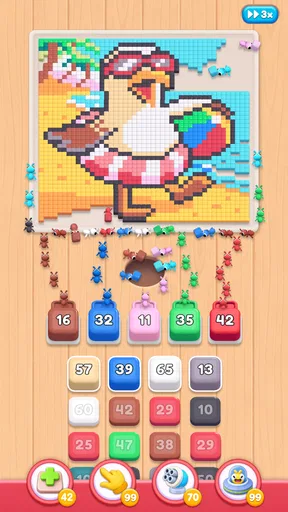
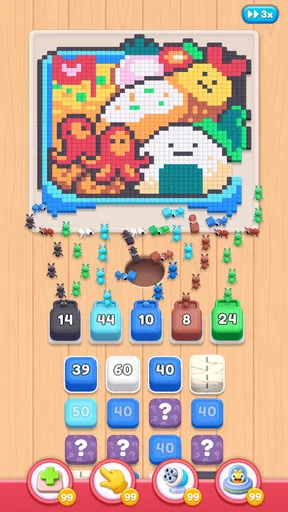
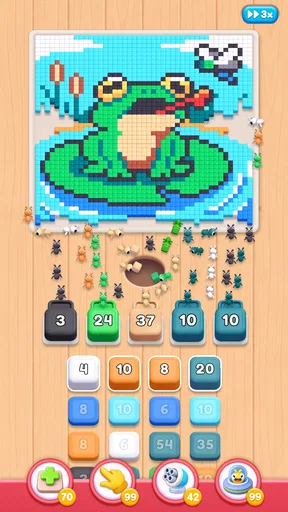
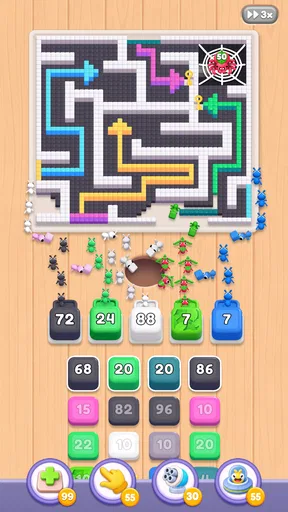
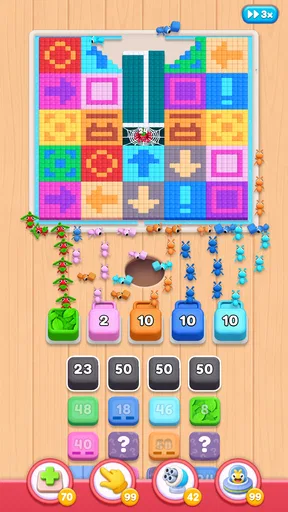
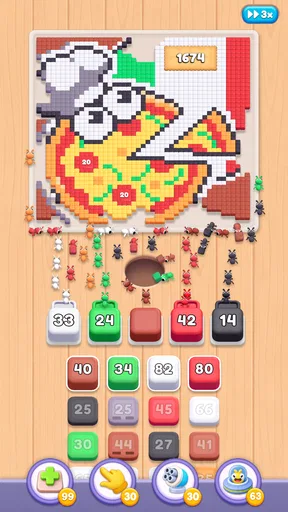
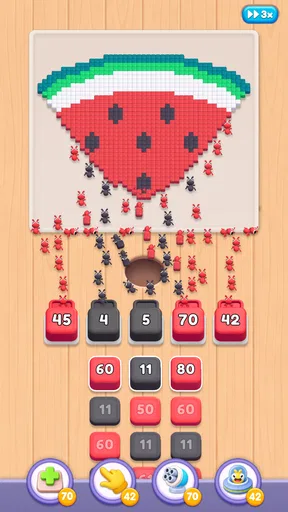
 Analysis by AppCompare
I’m drawn to puzzle games that make their rules easy to grasp but still give me something to think about, and Food Hunt: Pixel Puzzle is aimed squarely at that kind of short, focused play. Its ant-and-food theme gives the puzzle a clear visual identity, while the basic appeal is simple: work through the challenge one color at a time. I’d consider it when I want a small mental reset rather than a sprawling game to manage.
What to consider before you play
The first question is what kind of puzzle mood you’re in. If you enjoy noticing patterns, planning a few moves ahead, and concentrating on a compact task, this game is a more natural fit than a word quiz or a long-form logic adventure. Its pixel presentation and food-hunt premise suggest a playful tone, but the appeal is still the act of solving, not a deep story or a broad collection of activities.
I’d also think about how much variety you expect from one puzzle game. Some players want a constantly changing mix of mechanics; others prefer one central idea they can learn and improve at. Food Hunt sits closer to the latter description. That focus can be satisfying if you like refining your approach, but it may feel narrow if you quickly tire of repeating a puzzle’s basic rhythm.
It is a free puzzle game from EVERFUN, with optional in-app purchases priced from $0.99 to $99.99 per item. That makes it easy to try without paying upfront, but I’d treat any purchase as something to consider only after I know the game suits me. The wide range means it is sensible to check the price of an individual item before confirming anything, rather than assuming every purchase is a small add-on.
A quick game for small gaps in the day
A realistic use for this kind of game is a quiet break between errands or while waiting for a friend. I’d open it when I have enough attention to focus on a puzzle but not enough time to commit to a long session. For that situation, the useful test is whether I can understand the immediate objective quickly and feel that a short attempt is worthwhile, even if I don’t finish everything I hoped to.
That same focused quality makes it less suitable when I need an app to keep a group entertained or when I want an absorbing world to explore for an evening. A solo puzzle is best when I’m happy to give it my own attention. If I’m looking for social play, narrative progression, or a broader range of activities, a different kind of game will probably serve me better.
Why the color-by-color premise stands out
The distinctive idea here is the relationship between ants, food, and color. Rather than presenting itself as an abstract board of symbols, the game gives the puzzle a small theme to hold onto. That matters more than it may sound: a clear visual premise can make a logic task easier to read and more pleasant to return to, especially for players who find bare grids a little sterile.
Worth Reading Before You Choose

Baby Panda World Brings Quick Play to Modern Phones, but Its Game Library Feels Busy

ESPN’s Live Game View Makes Following Close Games Easier

QuizzLand Review: A Good Fit for Short Trivia Breaks, Not Every Player

Basketball Stars: Multiplayer Is Fast, but Can It Recover When Matches Go Wrong?

WEBTOON Turns Phone Updates Into a Better Reading Routine

Link to Windows Runs on Shared Habits, Not Social Feeds
One practical approach I’d use is to pause before acting and identify which color seems to be the current priority. The one-color-at-a-time framing encourages deliberate attention instead of treating every visible element as equally urgent. That’s a useful habit in compact puzzles: first decide what the game is asking me to focus on, then make a move. It can reduce careless choices without turning the session into a serious study exercise.
A second tip is to use a failed attempt as information, not just as a reason to rush into another one. When a puzzle has a color-based objective, I can pay attention to which choice made the situation harder and adjust my next plan. That kind of small self-review is often more rewarding than tapping quickly. It also helps distinguish whether I’m enjoying the puzzle itself or merely hoping to clear it as fast as possible.
Pixel art is a good match for a game built around readable, discrete pieces: it can make the board feel characterful without needing a realistic setting. The trade-off is that some players simply prefer clean, minimal shapes or polished, lifelike art. If visual simplicity is your priority, the theme may be a pleasant touch; if you want a particular art style above all else, it is worth checking the game’s presentation before deciding it is for you.
How it compares with other puzzle choices
Compared with word puzzles, Food Hunt puts the emphasis on visual arrangement and color rather than vocabulary. That makes it a better choice when I want to look, compare, and plan instead of searching for a word. Compared with number puzzles, its food-and-ant framing is less clinical, which may make a short session feel more playful. Neither comparison makes it universally better; it comes down to whether visual pattern work is the sort of thinking I enjoy.
It also differs from puzzle games built around a lengthy campaign or a large sequence of unrelated tasks. A focused central premise can help me settle into a recognizable routine, but it offers less obvious variety than a game that changes its rules from one activity to the next. If I tend to abandon games as soon as a pattern becomes familiar, I would be cautious. If I like getting better at one kind of challenge, that consistency may be precisely the point.
For a more relaxed alternative, I might choose a casual matching game when I want lighter decisions and less deliberate planning. For a more demanding session, a dedicated logic or number puzzle may be the better pick. Food Hunt occupies a middle ground for someone who wants an accessible-looking theme around a puzzle task, without necessarily wanting a purely abstract brainteaser. The best choice depends on whether its particular color-led premise keeps me curious.
What to expect from the commitment
The game is free to download, but optional purchases mean “free” does not automatically describe every possible way to play or spend. I’d begin without buying anything and see whether the core experience holds my attention. That is especially useful for a puzzle game, where enjoyment depends on the feel of solving rather than on a feature list. If I find myself returning because I genuinely like the challenges, I can decide later whether any paid item is worthwhile.
There is also a small but important compatibility check: the listed minimum operating-system requirement is version 10. I’d confirm that my device meets it before setting aside time to install the game. This is a more practical concern than it may seem, because a puzzle can be a convenient waiting-room companion only if it runs on the device I actually carry.
The game is rated for Everyone, so its stated age classification is broad. That can make it easier to consider for a household where different ages share a device, though an age rating alone does not tell me whether every player will enjoy the puzzle style. For younger players especially, I’d still pay attention to optional purchases and make sure they understand that purchases are separate from simply trying the game.
Switching to Food Hunt from another puzzle game should be a low-effort choice in terms of learning its general premise: the color-by-color framing gives me a straightforward starting point. The bigger cost is attention. If I’m already invested in a game with a deeper progression system, this one may work better as a side option for quick breaks than as a full replacement. Conversely, if my current puzzle app feels cluttered or demands long sessions, a more focused alternative could be refreshing.
Who is most likely to enjoy it
I’d recommend giving it a try if you like visual puzzles, enjoy a light theme, and prefer to concentrate on one clear kind of challenge at a time. It may also suit someone looking for an easy-to-start game to open during short stretches of free time. The public response is encouraging: it has a 4.5 average from around 113,000 ratings, alongside more than a million installs. Those figures suggest broad interest, though they can’t guarantee that its particular puzzle style will click for me.
I’d skip it if I mainly want multiplayer competition, an unfolding story, or a rotating set of very different puzzle modes. I’d also look elsewhere if I dislike color-led visual tasks or know I lose interest when a game asks me to work within one central premise. In those cases, a word game, a number-based logic puzzle, or a more varied casual collection is likely to match my preferences better.
Food Hunt is currently at version 0.41 and was released on May 13, 2026. I wouldn’t treat a version number by itself as a reason to play or avoid it; what matters more is whether the game’s core idea feels satisfying in practice. Its early version is simply useful context when setting expectations: I’d approach it as a focused puzzle offering and judge it by the quality of the play I actually get, rather than assuming it has the breadth of a long-established puzzle collection.
My recommendation
My advice is to try it if the idea of a themed, color-focused puzzle sounds appealing and you want something that can fit into a short break. The strongest reason to choose it is its specific combination of ants, food, and color-based focus, not a promise that it can replace every other puzzle game. I’d start free, avoid rushing through choices, and see whether the central challenge stays engaging after the novelty of the theme wears off.
For me, that makes Food Hunt: Pixel Puzzle an easy recommendation for curious visual-puzzle fans, but not an automatic pick for everyone. If you value one clear puzzle identity and a playful presentation, it is worth a look. If you need variety, social features, or a more demanding long-session experience, another category will be a better match. The right decision is simple: try it when its particular kind of focus sounds relaxing, and move on if you find yourself wishing it were a different sort of game.
Making a short session work for you
I’d approach each visit with a small goal rather than expecting every spare minute to become a long run. For example, if I open the game while waiting for a coffee, I can focus on understanding the immediate color priority and making one considered attempt. If I have more time later, I can return with a clearer sense of what I learned. This keeps the puzzle from becoming a hurried tapping exercise and makes even a brief session feel intentional.
It is also worth noticing the point at which concentration starts to fade. A color-focused puzzle asks me to compare what is visible and think about the consequences of a choice; when I’m distracted, I’m more likely to act without a plan. I’d rather stop after a short, satisfying attempt than keep playing impatiently and blame the game for mistakes caused by multitasking. That makes it a better companion for a calm pause than for moments when I’m juggling several things.
Choosing it for different players
For someone who already enjoys visual logic challenges, the theme can be a useful change of tone without asking them to switch to words or arithmetic. It may also be a gentle entry point for a player who finds stark grids intimidating, because the ants-and-food framing gives the task a more approachable identity. I’d still judge the fit by whether they enjoy studying colors and making deliberate choices; a friendly presentation cannot make a puzzle style appealing to everyone.
In a shared household, I’d treat it as an individual turn-taking game rather than assume it will work as a party activity. One person can solve while another watches and suggests a move, but the pleasure still comes from attending to the same visual challenge. That can make it a low-key way to compare approaches, especially if one player likes planning ahead and another prefers to test an idea. If the group wants everyone actively involved at once, a dedicated multiplayer game is a better choice.
For younger players, the Everyone rating is reassuring as a broad age classification, but I’d still set expectations around purchases and device use. I would explain that optional spending is not needed just to explore whether the game is enjoyable, and I’d keep purchase confirmation under adult control. That practical boundary matters more than treating an age label as a guarantee that the game suits every child’s patience or puzzle experience.
What makes the choice worthwhile
The best reason to give it a chance is not that it promises to replace a favorite puzzle app, but that its specific visual premise may offer a different kind of concentration. I’d compare it with my usual choice after a few sessions: do I appreciate having a focused, color-led task available, or do I keep wishing for numbers, words, or changing rules? That simple check is more useful than judging it by how quickly I finish a single puzzle.
I’d also keep the purchase decision separate from the enjoyment decision. Trying the free game can tell me whether its central idea holds my attention; it does not mean I need to buy anything to validate that choice. If I’m unsure what an individual item costs, I’d inspect the displayed price before confirming a transaction. That cautious approach is sensible when optional items range widely, and it keeps a casual puzzle break from turning into an impulsive spend.
Ultimately, I see Food Hunt as a specific answer to a specific mood: a playful visual puzzle for someone who wants to focus on one clear kind of challenge. It is a less convincing choice for people who need social competition, a substantial story, or constant mechanical change. If its central idea sounds appealing, I’d try it on a quiet break and pay attention to whether I enjoy the decisions themselves. If I do, it can earn a place beside my other puzzle games; if not, switching back to a word, number, or mixed-activity option is an easy call.
Pros
- Pixel-art visuals give the puzzles a cheerful
- distinctive look.
- Short stages make it easy to play in quick sessions.
- Simple controls are approachable for new puzzle players.
- Food-themed levels provide variety across the game.
- A relaxed pace makes it suitable for casual play.
Cons
- Some puzzle solutions may feel repetitive over time.
- Later stages can require more trial and error.
- The pixel-art style may not appeal to every player.
- Progress may feel slow for players seeking rapid challenges.
- It may offer limited appeal to players who prefer story-driven games.
FAQs for Food Hunt: Pixel Puzzle
What is Food Hunt: Pixel Puzzle?
Food Hunt: Pixel Puzzle is a casual puzzle game built around pixel-art visuals and food-themed challenges. Its levels generally ask you to solve a small puzzle by following the game’s rules, with new layouts providing variety as you progress. The exact mechanics and available modes can differ by version, so check the app listing and in-game instructions to see what the current release offers.
Is Food Hunt: Pixel Puzzle suitable for children?
The game’s colorful pixel-art presentation and straightforward puzzle format may appeal to younger players, but suitability depends on the child and the specific version. Before downloading, review the age rating, content descriptors, and privacy information on the relevant app store. Also check whether the game includes advertisements, in-app purchases, or external links, and consider supervising play for younger children.
Can I play Food Hunt: Pixel Puzzle offline?
Offline access can depend on the game’s current version and how it handles ads, progress syncing, or other online features. Puzzle levels may be playable without a connection in some releases, but this should not be assumed. Check the store listing or test the game after installation while offline. An internet connection may still be needed for updates, purchases, or optional features.
Is Food Hunt: Pixel Puzzle free to download, and does it include purchases or ads?
The price and monetization model can vary by platform, region, and release. Check the Google Play Store or Apple App Store listing for the current download price and disclosures about advertising or in-app purchases. If purchases are available, they may offer optional items or conveniences, but their presence and purpose should be confirmed in the game. Use device-level purchase controls if needed.
Which devices support Food Hunt: Pixel Puzzle, and how can I download it safely?
Compatibility depends on the version of the game and your device’s operating system, so check the requirements shown on its official Google Play or Apple App Store page before downloading. Use the store listing to confirm the developer, reviews, permissions, and latest update information. Avoid unofficial download sites, which may offer outdated or altered files, and make sure your device has enough storage.


